
FLEXAFIT Foundation Certification for Coaches
-
BySigne Ronka
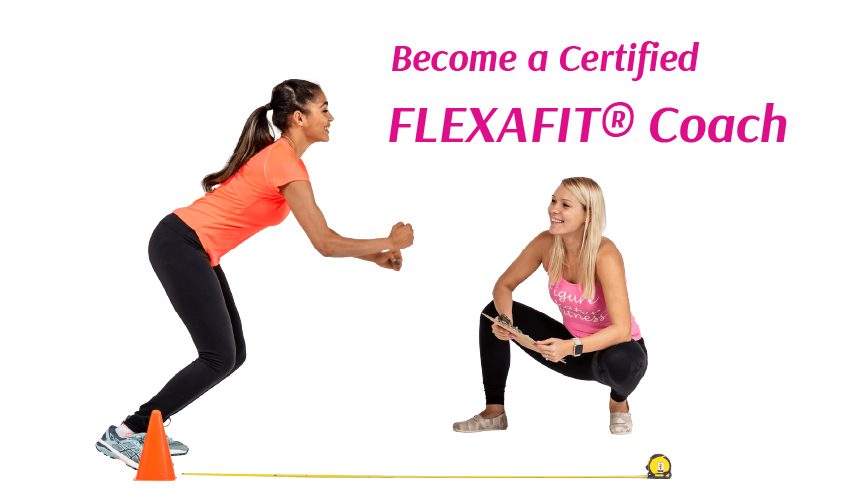
The FLEXAFIT® Level 1 Certification is the starting point for coaches and trainers who want to deliver world-class off-ice training that directly supports on-ice performance. This course teaches the essential foundations of skating-specific strength, mobility, alignment, jump mechanics, and athletic development—designed by international-level coach and strength specialist Signe Ronka.
Whether you’re a skating coach, personal trainer, or former athlete, Level 1 equips you with the knowledge and systems to confidently train skaters of all ages and stages with safe, effective, and consistent methods.
Level 1 Certification Course Duration
16-20 Hours (Self-Paced Sections with Practical Components)
What You Will Learn
FLEXAFIT Methodology — The core principles behind our gold-standard training system.
Sport Science & Anatomy — How the body moves and how it affects skating technique.
Fundamental Fitness Essentials — Strength, balance, stability, and coordination foundations.
Periodization & Injury Prevention — How to plan safe, effective training year-round.
Plyometrics for Skaters — Power development and landing mechanics for stronger jumps.
Skating-Specific Fitness — Rotation, posture, edge control, speed, and flexibility essentials.
Off-Ice Jump Training — Key drills that translate directly to consistent on-ice jumps.
Spins & Flexibility — Safe flexibility progressions and spin-position mobility.
Warm-Up & Cool-Down Systems — Routines that prepare, protect, and support recovery.
Assessments & Tracking — How to evaluate skater movement and monitor progress.
Practical Application — Real-world examples you can use immediately.
Final Exam & Certification — Earn your official FLEXAFIT® Level 1 Certification.
Course Format
Self-paced modules with video instruction
Demonstrations of every exercise and movement
Downloadable coaching resources
Online exam to earn certification
Prerequisites for Level 1 Certification
To enroll in this course, you must meet any two of the following:
Certified Skating Coach (NCCP or equivalent)
Certified Personal Trainer (recognized national/international certification)
Former skater who has landed an Axel or higher (e.g., double loop, gold dance test, senior synchro)
(Valid First Aid certification is mandatory for all participants.)
By enrolling, you confirm you meet the prerequisites and agree to the FLEXAFIT Trainer Agreement.
- 16 Sections
- 104 Lessons
- Lifetime
- Introduction to FLEXAFIT Methodology2
- Foundations in Sport Science, Anatomy, and Alignment5
- 2.1Introduction to Foundations in Sports Science, Anatomy, and Alignment
- 2.2Importance of Anatomy in Figure Skating
- 2.3Alignment, Mobility, Strength & Technique
- 2.4Understanding Muscle Activation and Alignment, Biomechanics, Short-Stretch Cycles and Energy Systems
- 2.5Quiz and Reflection for “Foundations in Sport Science and Anatomy”3 Questions
- Fundamental Fitness Essentials - Strength, Conditioning, and Muscles51
- 3.1Introduction to Fundamental Fitness Essentials (includes video)
- 3.2Introduction Video for both Strength and Conditioning, and Plyometrics (next section)
- 3.3UPPER BODY STRENGTH and AWARENESS
- 3.4✓ Section 1: Importance of Upper Body Strength in Figure Skating
- 3.5✓ Section 2: Anatomy and Functions of Key Upper Muscle Groups
- 3.6✓ Section 3: Practical Upper Body Exercises for Figure Skaters (includes video)
- 3.7✓ Section 4: Strategies for Integrating Upper Body Training into Figure Skating Routines
- 3.8Quiz for “Upper Body Strength and Awareness” plus self-reflection questions1 Hour3 Questions
- 3.9CORE STABILITY and POSTURE
- 3.10✓ Section 1: The Role of Core Stability and Posture in Figure Skating
- 3.11✓ Section 2: Anatomy and Functions of Core Muscles
- 3.12✓ Section 3: Core-Strengthening Exercises for Skaters (includes video)
- 3.13✓ Section 4: Integration of Core Training into Figure Skating Programs
- 3.14✓ Section 5: Benefits of Core Strength for Skating Performance
- 3.15Quiz for “Core Stability and Posture” plus self-reflection questions3 Questions
- 3.16GLUTE ACTIVATION and LOWER BODY ALIGNMENT
- 3.17✓ Section 1: Importance of Glute Activation for Figure Skaters
- 3.18✓ Section 2: Anatomy and Functions of the Glute Medius and Minimus
- 3.19✓ Section 3: Identifying Glute Weakness in Skaters
- 3.20✓ Section 4: Glute Activation Exercises (includes video)
- 3.21✓ Section 5: Integrating Glute Activation into Training Programs
- 3.22Quiz for “Glute Activation and Lower Body Alignment” plus self-reflection quiz4 Questions
- 3.23ADDUCTORS, HAMSTRINGS, and ANKLE MOBILITY
- 3.24✓ Section 1: Importance of Adductors and Hamstrings in Figure Skating
- 3.25✓ Section 2: Anatomy and Functions of the Adductors and Hamstrings
- 3.26✓ Section 3: Identifying Weakness in the Adductors and Hamstrings
- 3.27✓ Section 4: Adductor and Hamstring Strengthening Exercises
- 3.28✓ Section 5: Importance of Ankle Mobility
- 3.29✓ Section 6: Ankle Mobility Drills
- 3.30Quiz for “Adductors, Hamstrings, and Ankle Mobility” plus self-reflection quiz4 Questions
- 3.31NECK STRENGTH and INJURY PREVENTION
- 3.32✓ Section 1: Importance of Neck Strength in Figure Skating
- 3.33✓ Section 2: Anatomy of Neck Muscles Relevant to Figure Skating
- 3.34✓ Section 3: Identifying Neck Weaknesses and Risks
- 3.35✓ Section 4: Neck Strengthening Exercises
- 3.36✓ Section 5: Integrating Neck Strength Training into Programs
- 3.37Quiz for “Neck Strength and Injury Prevention” plus self-reflection quiz4 Questions
- 3.38QUADRICEPS, TIBIALIS ANTERIOR, and SHIN SPLINT PREVENTION
- 3.39✓ Section 1: Importance of Quadriceps and Tibialis Anterior Muscles in Figure Skating
- 3.40✓ Section 2: Anatomy and Function of the Quadriceps and Tibialis Anterior
- 3.41✓ Section 3: Recognizing the Signs of Weak Quadriceps and Tibialis Anterior
- 3.42✓ Section 4: Targeted Exercises for Quadriceps Strength
- 3.43✓ Section 5: Strengthening the Tibialis Anterior
- 3.44✓ Section 6: Preventing and Managing Shin Splints
- 3.45Quiz for “Quadriceps, Tibialis Anterior, and Shin Splint Prevention” plus self-reflection quiz3 Questions
- 3.46CONDITIONING and ENDURANCE FOR FIGURE SKATERS
- 3.47✓ Section 1: Interval and Circuit Training for Skaters
- 3.48✓ Section 2: Managing Energy Systems for Peak Performance
- 3.49✓ Section 3: Age-Appropriate Conditioning Programs
- 3.50✓ Section 4: Integrating Conditioning into Training Plans
- 3.51Quiz “Conditioning and Endurance for Figure Skaters” plus key takeaways5 Questions
- Plyometric Training for Figure Skaters7
- 4.1Introduction to Plyometric Training for Figure Skaters
- 4.2Plyometric Principles for Foundational, Advanced, and Master levels:
- 4.3✓ Foundational Plyometrics
- 4.4✓ Advanced Plyometrics
- 4.5✓ Master Plyometrics
- 4.6Integrating Plyometrics into Off-Ice Training Sessions
- 4.7Quiz and Key Takeaways for “Plyometric Training for Figure Skaters”3 Questions
- Periodized Training and Injury Prevention5
- Warm Up, Cool Down, Flexibility, and Injury Prevention5
- Skating-Specific Fitness Components9
- 7.1Introduction to Skating-Specific Fitness Components
- 7.2Teaching Strategies for Coaches
- 7.3Building a Comprehensive Training Plan
- 7.4OFF-ICE EXERCISES FOR SPECIFIC SKATING ELEMENTS:
- 7.5✓ Stroking and Gliding
- 7.6✓ Edges
- 7.7✓ Spirals
- 7.8✓ Spread Eagle
- 7.9Quiz and Conclusion for “Skating-Specific Fitness Components”3 Questions
- Stationary jumps9
- 8.1Introduction to Stationary Jumps
- 8.2Stationary jumps 1: Beginning Stationary Jumps (includes video for Segments 1-5)
- 8.3Stationary jumps 2: Two-Foot Exercises
- 8.4Stationary jumps 3: Drill 1 – Twist Jumps with Rotation
- 8.5Stationary jumps 4: Drill 2 – Alternating Twist Jumps
- 8.6Stationary jumps 5: Incremental Rotation Progressions
- 8.7Stationary jumps 6: Adding Sequential Movments
- 8.8Stationary jumps: Progression to Higher Levels
- 8.9Quiz, Conclusion, and Review for “Stationary jumps”4 Questions
- Off Ice Jumps (waltz jump to axel plus combos)10
- 9.1INTRODUCTION TO OFF ICE JUMPS
- 9.2Off ice jumps: Waltz jump and Axel Jump (6-steps)
- 9.3Off ice jumps: Salchow
- 9.4Off ice jumps: Toe Loop
- 9.5Off ice jumps: Loop
- 9.6Off ice jumps: Flip
- 9.7Off ice jumps: Lutz
- 9.8Off ice Combination jumps
- 9.9Landing Position exercises
- 9.10Quiz, Conclusion, and Review for “Off Ice jumps”4 Questions
- Off Ice Spins6
- Testing, Goal-setting, and Progress Tracking2
- Putting it all together! Example 45-60min off-ice classes2
- Final Exam and Practical for Certification (email)3
- After Level 1 Certification - Next Resources (forthcoming)4
- FAQ (frequently asked questions)0
- Video Resources (forthcoming)0
PREREQUISITES
Two of the following: Skating coach Personal trainer Former skater landing axel and up (minimum age 17) Valid First Aid (mandatory)
Yes!
This certification is built for coaches who want to improve the quality of their coaching and help their skaters make real, measurable progress. As a certified FLEXAFIT® trainer, you’ll be equipped to lead structured training that supports injury prevention, technical development, and enhanced on-ice improvement.
To be eligible for certification, you must be any 2 of: - Certified Skating Coach - Certified Personal Trainer - Former skater, landing Axel and up